
Introduction: No Two Blades Are Alike
You don't understand a tool when you understand a Damascus knife—you understand a story forged by fire. With their signature curling steel designs and master-class craftsmanship, the knives have attained mythical status in outdoor and tactical equipment, and collector communities. But what is it about each and every one that makes them so unique?
Let's get to the meat—blade patterns, handle work, forge techniques, etc.
1. The Soul of the Blade: Damascus Pattern Variations
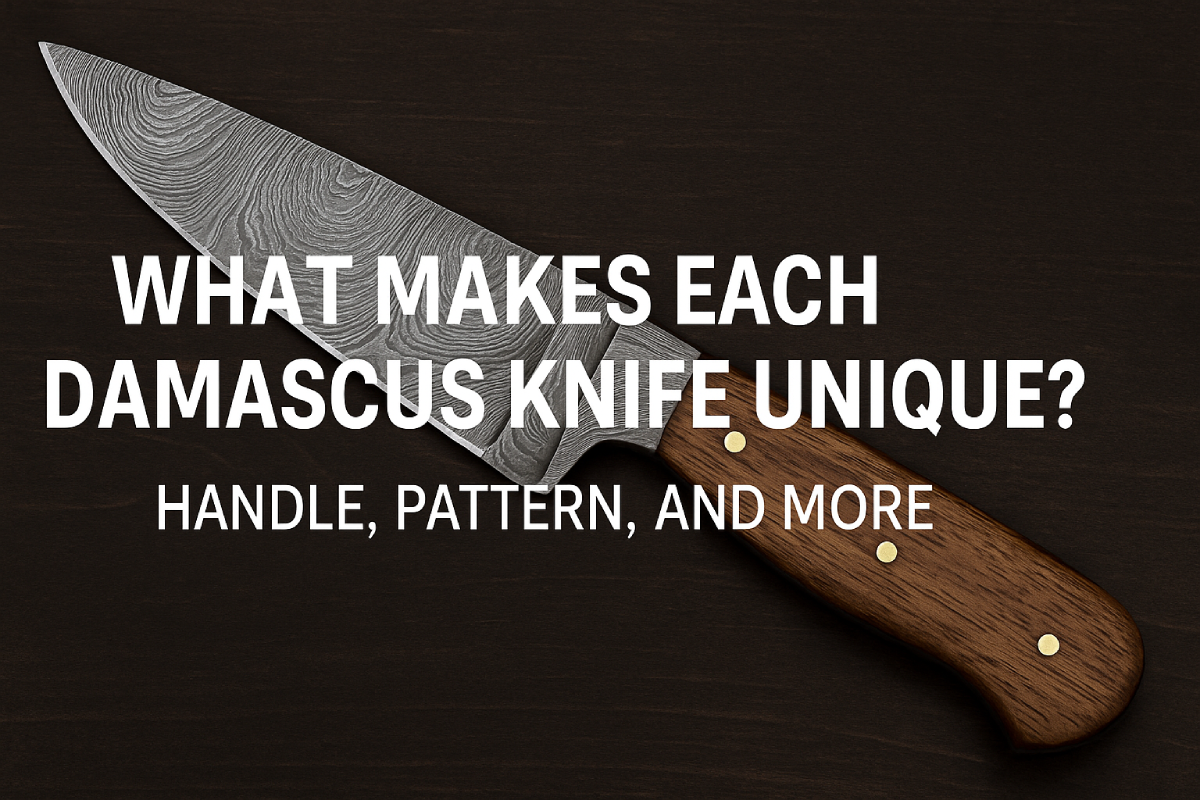
Each Damascus blade begins life as a ballet of steel and flame. When forging, alternating layers of high-carbon and low-carbon steel are folded and pounded back and forth, folding the metal repeatedly back and forth into wave patterns looking like wood grain or flowing water.
Most Typical Pattern Types:
-
Twist: Spiral, trance-like rings—perfect for collectors.
-
Ladder: Looks like steps or ladders on the blade—symbolizes strength.
-
Raindrop: Visible, rounded marks—lean and meager.
- Random/Organic: It's not in the pattern—raw beauty shaped by fire.
💡 No two knives are ever alike at ExplorationWild—within even the same knife category.
👉 Purchase Damascus knives by blade pattern and choose the one that speaks to you.
2. Handle Materials: More Than a Grip
A knife soul can be described as existing inside the blade, but its personality is in the handle. Where function meets show and touch.
-
Unique Handle Options You’ll Find:
-
Antler & Bone Knives: Rugged, earthy, and built for the wild.
-
Rosewood Handles: Adds warmth and rustic charm.
-
Color Resin Blends: Modern, vibrant, and eye-catching.
- Brass & Mosaic Pins: Small details that make a big visual impact.
👉 More Damascus knives by handle style to buy. Hand-shaped grips make every knife truly one-of-a-kind.
3. Blade Shape & Purpose: Shaped with a Function
Blade shaping determines function, not aesthetics—wood carving, filleting a fish, or prep cutting.
Functional Shapes You'll Find:
-
Clip Point: Detail work and piercing precision.
-
Drop Point: Skinner's and hunter's go-to favorite.
-
Tanto: Sharp tactical force in motion.
- Chef's Curve: Slicing and kitchen prep perfection.
Don't know which blade fits your lifestyle👉 Find out our best-selling practical Damascus knives.
4. Craftsmanship: The Mark of a Maker
Hand-forged Damascus knives, as contrasted with mass-produced knives, carry the maker's mark. Hand-finishing and heat treatment mean hours of craftsmanship and effort in these knives. Imperfections? Those aren't flaws—those are marks of authenticity.
👉 Interested in what makes Damascus steel so cool? Read our blog: What Makes Damascus Knives Special?
5. Sheaths That Say a Thousand Words
A knife's best companion is its sheath—and quite possibly no less unique. Our hand-stamped leather sheaths, from basket-weave stamped leather to hand-stitched edgework, are designed to hold and show off your blade with pride.
Conclusion: Own a Legacy, Not Just a Knife
What sets each Damascus knife apart is deeper than skin—it's heritage in every forge scar, handle shape, and leather stitch. You're not buying a knife, if you're a survivalist, home cook, or collector—you're buying heritage.
👉 Start your collection with ExplorationWild's Damascus Collection.
🔥 Knives Included You Need to See:
-
Damascus Gut Hook Knife – Amber Horn Handle
-
5-Piece Damascus Knife Set – Black & Gold Handles
- Damascus Knife – Red & Walnut Ring Antler Handle